Guides
New or used specialty food equipment: what each really costs
New vs used specialty food equipment judged by total cost in named variables, an inspection protocol for used machines, and the cases where new is the cheaper buy.
What to take away
- New or used specialty food equipment costs more than the sticker says. The sticker price is one of seven variables, and used wins on that one and loses on the rest.
- Typical ranges, as of 2026used machines sell for 40% to 70% below list, but a filler rebuild runs $2,500 to $6,000 and service calls $150 to $250 an hour.
- Used wins for simple stainless items with no seals, motors or controllers. New wins where sanitary design, documentation or a warranty is what you are buying.
- Inspect used food equipment as an inspector would, not as a buyer would: cleanability first, capacity second, price last.
- A machine without records is a machine whose history you will discover during production.
The total cost, in seven variables and dollars
For any item, new or used, define:
Total cost variables
- Ppurchase price
- Ffreight and rigging
- Iinstallation and room changes
- Rrepair or rebuild before first use
Total cost T = P + F + I + R + M + D minus S.
Typical prices, as of 2026:
| Machine, with named makes | Typical new | Typical used | What drives the range |
|---|---|---|---|
| 30 by 60 inch stainless work table with undershelf (Advance Tabco, Regency) | $350 to $800 | $150 to $400 | Steel gauge, NSF listing, freight |
| Three-compartment sink (Krowne, Advance Tabco) | $1,200 to $3,000 | $400 to $1,200 | Compartment size, faucet, drainboards |
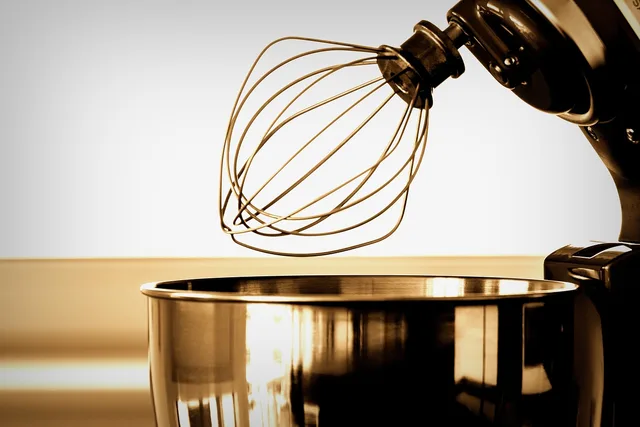
| 20-quart planetary mixer (Hobart Legacy HL200, Globe SP20) | $9,000 to $13,000 | $3,000 to $6,500 | Gearbox wear, bowl and attachments, single or three phase |
| Chamber vacuum sealer (VacMaster VP215, Henkelman Boxer) | $1,000 to $6,000 | $600 to $3,500 | Chamber size, pump hours, seal bar condition |
| Impulse sealer (Uline, American International Electric AIE-300) | $100 to $400 | $50 to $200 | Seal width, wattage, spare elements |
| Bench scale (Ohaus Valor 5000, Mettler Toledo ICS) | $400 to $900 | $150 to $400 | Capacity, resolution, calibration certificate |
| Two-door reach-in refrigerator (True T-49, Beverage-Air) | $4,000 to $7,000 | $1,200 to $3,000 | Compressor age, refrigerant, door seals |
| Two-head piston filler (Inline Filling Systems, Accutek) | $14,000 to $60,000 | $5,000 to $20,000 | Head count, product-contact parts, controls |
| Sheet pan rack or cart (New Age Industrial, Winco, Lakeside) | $150 to $400 | $50 to $200 | Material, wheel condition, capacity |
| Band sealer (American International Electric, Accu-Seal) | $800 to $2,500 | $400 to $1,200 | Seal type, speed, spare parts |
These are typical ranges, as of 2026, from manufacturer and dealer list prices. A compressor replacement alone runs $1,500 to $2,500, which is why a $1,200 used reach-in is not automatically the cheaper machine.
Here is what the other letters cost. Freight and rigging for one palletized machine typically runs $300 to $1,500 within the continental United States, and a liftgate adds $75 to $150.
Installation drives I. A 240-volt single-phase circuit typically costs $500 to $1,500 at commercial electrician rates of $85 to $150 an hour, and a floor sink or grease trap adds $800 to $2,500.
R is where used machines get expensive. Seal and gasket kits for a piston filler typically run $500 to $2,000. A gearbox rebuild on a 20-quart planetary mixer runs $1,500 to $3,000. A controller for an obsolete machine may not exist at any price.
M and D scale with how hard the machine runs. New machines from Hobart, True and Henkelman typically carry 12 months of parts and labor, which holds M near zero for that year.
A used item lowers P and often raises R, M and D. A new item raises P and lowers R and D, and a warranty lowers M for a period.
Fill variables from quotes and your batch records, not from feeling. If D is unknown, take one lost batch's contribution and ask how many times a year you could bear it.
This calculation is worth doing after the batches are recorded and the reorders exist; that stage of launch is described in how to start a specialty food business.
Where used usually wins
Why used works
- Stainless tables, shelving and sinks (Advance Tabco, Regency, Krowne)
- No moving parts; cleanability is visible
- Stockpots and kettles without controllers (Vollrath, AccuTemp)
- Simple, durable
- Racks, carts and bins (New Age Industrial, Winco, Lakeside)
- Commodity items
- Scales (Ohaus, Mettler Toledo)
- Recalibratable
- Refrigeration cabinets (True, Beverage-Air, Traulsen), with caution
- Long life if the compressor is sound
What to check
- Stainless tables, shelving and sinks (Advance Tabco, Regency, Krowne)
- Cracks, corrosion, welds, that it is food-grade stainless
- Stockpots and kettles without controllers (Vollrath, AccuTemp)
- Pitting, dents that trap product, handle condition
- Racks, carts and bins (New Age Industrial, Winco, Lakeside)
- Material, cracks in plastic, wheels
- Scales (Ohaus, Mettler Toledo)
- Calibration certificate or a test against known weights
- Refrigeration cabinets (True, Beverage-Air, Traulsen), with caution
- Compressor age, temperature hold over a day, door seals, service records
Where new usually wins
Why used is risky
- Fillers and pumps (Inline Filling Systems, Accutek, Biner Ellison)
- Product-contact seals and internal passages you cannot see
- Sealers and cappers (Henkelman, Multivac, American International Electric)
- Wear parts and calibration decide the seal
- Mixers with gearboxes (Hobart Legacy, Globe)
- Hidden wear, seals that leak into product
- Anything with a controller
- Obsolete electronics, no support
- Anything for a product with an allergen changeover
- Unknown history of what ran through it
What you are paying for with new
- Fillers and pumps (Inline Filling Systems, Accutek, Biner Ellison)
- Sanitary design you can document, parts availability, a warranty
- Sealers and cappers (Henkelman, Multivac, American International Electric)
- Consistent seals from the first case
- Mixers with gearboxes (Hobart Legacy, Globe)
- Reliability on the station that stops production when it fails
- Anything with a controller
- Support and a manual
- Anything for a product with an allergen changeover
- A clean history
The last row is the one people forget. A used machine that ran a product with a major allergen carries that history into your facility. Unless you strip and validate cleaning of every product-contact surface, it can compromise your separation.
Allergen swabs such as Neogen Reveal 3-D typically cost $8 to $15 each, and a validated changeover can take a full day of labor.
Where new usually wins
Item
- Fillers and pumps
- Hidden product-contact seals
- Sealers and cappers
- Wear parts decide the seal
- Mixers with gearboxes
- Hidden wear, leaking seals
- Anything with a controller
- Obsolete electronics, no support
- Allergen changeover equipment
- Unknown product history
Why used is risky
- Fillers and pumps
- Sanitary design, parts, warranty
- Sealers and cappers
- Consistent seals from first case
- Mixers with gearboxes
- Reliability on stopping station
- Anything with a controller
- Support and a manual
- Allergen changeover equipment
- A clean history
What new pays for
- Fillers and pumps
- Sealers and cappers
- Mixers with gearboxes
- Anything with a controller
- Allergen changeover equipment
The U.S. Food and Drug Administration: Questions and Answers Regarding Food Allergens guidance explains the role of allergen controls in covered facilities. A machine you cannot clean to that standard is a control you do not have.
The inspection protocol for used food equipment
Do this in person, with the machine running if it can.
Used equipment inspection protocol
- Ask for purchase, service, repair and product records
- Walk every food-contact surface for pitting and cracks
- Take it apart as far as cleaning requires
- Run it empty, then with water or stand-in product
- Check nameplate against your power supply
- Photograph everything including nameplate and wear
- Price R from what you saw, then run T
The sanitary-design questions in the equipment checklist for new owners apply to every item on this visit; a used machine that fails them is not cheap at any price.
If the federal preventive-controls rule covers your facility, the U.S. Food and Drug Administration: Preventive Controls for Human Food page explains that current good manufacturing practices and a written food safety plan apply. Equipment you cannot clean to a documented standard is then a hazard in that plan, not a bargain.
Safety on used machines
Guards go missing. Interlocks get bypassed. A used machine may arrive without the parts that made it safe, and the previous owner may not know. Ask for the manual, compare it with the machine, and treat any missing guard as part of R.
The Occupational Safety and Health Administration: Safety Management page recommends a program that finds and fixes hazards before an injury or an inspection. A used-equipment inspection is where that starts.
A used piston filler against a new one, in numbers
A used two-head piston filler at $6,000 has a visible seal problem and no records, so R is a rebuild priced by a service company at $4,500. M runs about $2,000 a year because you do not know what else is worn.
D is high because the station stops production when it fails. Assume two lost batches a year at $900 of contribution each. Over three years, including $800 freight and $900 of electrical work, the used machine's T is about $21,600.
New or used filler decision
Is Pn minus Pu less than the sum of R, M and D differences?
new is cheaper
used is cheaper
A new two-head filler at Pn, about $14,000, has R of zero, M covered by warranty for a period, and low D. Add $1,700 of freight and electrical work, $1,500 of maintenance over three years and $2,700 of lost-batch risk. Subtract about $8,000 of resale, and T is about $11,900.
If Pn minus Pu is less than the sum of the R, M and D differences, new is cheaper. Here the gap is $8,000 against $11,700 of repair, maintenance and downtime. New wins by about $9,700 once resale is counted, and it often does for exactly this item.
For a stainless table the same arithmetic almost always favors used, because R, M and D are close to zero either way. A 30 by 60 inch Advance Tabco table is about $600 new and $250 used. Freight of $75 and near-zero repair and downtime leave used ahead.
When to buy at all
The calculation above assumes you should own the item. Often you should not yet. Renting time in a shared kitchen keeps P, F and I at zero, and the framework for deciding when ownership makes sense is the equipment and setup guide.
Shared commercial kitchens typically charge $25 to $75 an hour, or $500 to $2,500 a month, as of 2026. Storage space and dry-goods access drive the range.
Buy the station that limits your batch, at the batch size that sells within shelf life, which is worked out in the inventory and sourcing guide.
When the reorders push you toward more capacity, decide which route to more volume the machine serves before choosing it; that is the question the expansion and market guide opens with.
Common questions
Is used equipment ever unacceptable to an inspector?
An inspector cares about condition and cleanability, not age. Used equipment in sanitary condition passes; new equipment installed so it cannot be cleaned does not. Ask your local health department what they look for.
Should I buy from an auction?
Only for items in the "used usually wins" table, and only if you can inspect before bidding. Auction machines with seals, pumps or controllers arrive with R unknown and no recourse. A buyer's premium of 10% to 18% on the hammer price is typical, and rigging is on you.
What about refurbished from a dealer?
Ask what "refurbished" included, in writing, and whether a warranty comes with it. A dealer refurbishment with a 90-day warranty typically adds 20% to 40% over an as-is price. A cosmetic clean-up does not.
How do I price D if I have never had a breakdown?
Take the contribution of one batch and the orders that depend on it, and assume one failure a year for a used machine on a critical station. At $900 of contribution per batch, that is $900 in the sum each year. Adjust as you learn.
Can I mix new and used in one line?
Yes, and most makers do: new where product contact and reliability matter, used for tables, shelving and pots. The variables tell you which is which.