Guides
Choosing specialty food equipment brands in 2027
Best specialty food equipment brands cannot be ranked from a page, so here are fifteen tests that separate a vendor worth buying from, scored on one sheet.
What to take away
- A ranked list of specialty food equipment brands for 2027 would be wrong for your product, your batch size and your region. This page names real makers by station, then hands you the tests.
- If you only read one thing, start here. Groen or Cleveland Range for kettles, Hobart or Robot Coupe for mixing, Urschel for cutting, Vemag or Handtmann for filling, Multivac or Henkelman for packaging, and Mettler-Toledo Safeline or Ishida for inspection.
- Shortlist starters for kettles, mixing and cuttingGroen, Cleveland Range, Hobart, Robot Coupe and Urschel.
- Shortlist starters for filling, packaging and inspectionVemag, Handtmann, Multivac, Henkelman and Mettler-Toledo Safeline.
- The audit is fifteen tests to put to any equipment vendor, scored on one sheet, before money changes hands.
- The tests weight sanitary design, product trials and parts support above price, because those decide whether the machine still works in year three.
- A vendor who refuses a product trial or cannot say where parts come from has answered two tests already.
The named makers, by station, and where each leads
A brand that makes an excellent kettle may make a poor filler. A machine that suits a viscous sauce may fail on a dry blend. A vendor with good support in one region may have none in yours.
Named makers by station
| Station | Makers | What a buyer should know |
|---|---|---|
| Kettles, braising pans, process vessels | Groen, Cleveland Range, Lee Industries (Philipsburg, Pennsylvania) | Steam-jacketed kettles and tilting braising pans for sauces and fillings. A new 40-gallon electric tilting kettle typically lists between $25,000 and $50,000; used units often sell for $5,000 to $15,000. Groen is the usual first call on agitated kettles and Cleveland Range on tilting pans, and both hold parts through US dealers. |
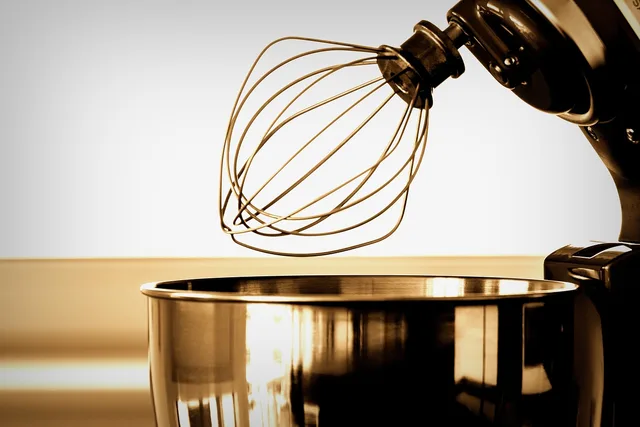
| Mixers and food processors | Hobart (Troy, Ohio, part of ITW Food Equipment Group), Robot Coupe (France, US office in Ridgeland, Mississippi), Varimixer (Denmark) | Hobart Legacy planetary mixers run from 20 to 140 quarts. The Robot Coupe R2 series is the bench processor in many test kitchens. New 60-quart planetary mixers typically list from $15,000 to $25,000. Hobart is the safer buy at larger sizes because parts and dealer reach are the widest, and Robot Coupe at the bench because it cleans down fast. |
| Ovens, cook-and-hold | Blodgett (Burlington, Vermont), Rational (Germany, US office in Rolling Meadows, Illinois), Alto-Shaam (Menomonee Falls, Wisconsin), Lincoln | Rational iCombi ovens cover combi cooking, Alto-Shaam cook-and-hold cabinets hold food through service, and Blodgett builds deck ovens. A 6-pan combi oven typically lists $15,000 to $25,000 before installation. Rational leads combi cooking on control and repeatability; Alto-Shaam is the pick when you only need cook-and-hold, and Blodgett when you only need deck baking. |
| Cutting and slicing | Urschel Laboratories (Valparaiso, Indiana), Globe Food Equipment (Dayton, Ohio), Berkel (ITW Food Equipment Group) | Urschel's Model CC slicer and DiversaCut 2110A dicer set the reference for cut quality. Globe and Berkel cover retail and deli slicing. Urschel leads cutting because cut quality is the spec buyers test, and the CC and DiversaCut are what they test against. |
| Grinding, chopping, filling | Biro Manufacturing (Marblehead, Ohio), Provisur Technologies (Mokena, Illinois, home of the Weiler and Formax brands), Vemag (Germany, US distribution by Reiser in Canton, Massachusetts), Handtmann, Risco | Biro's Model 3334 bandsaw is common in butcher shops. Vacuum fillers from Vemag, Handtmann and Risco hold weight control on emulsions and chunky mixes. Vemag leads vacuum filling on weight control with Reiser's US support behind it; Biro is the butcher-shop name and Provisur the larger-plant one. |
| Depositors and liquid fillers | Unifiller (Delta, British Columbia), Hinds-Bock (Bothell, Washington), Filamatic (Baltimore, Maryland) | Unifiller and Hinds-Bock build piston depositors for sauces, batters and fillings. Filamatic fills bottles and jars. Unifiller and Hinds-Bock lead this station because piston depositors are their main business, and Filamatic covers the bottle and jar end. |
| Packaging and sealing | Multivac (Germany, US office in Kansas City, Missouri), Henkelman (Netherlands) | Multivac builds thermoform fill-seal machines and tray sealers. Henkelman chamber vacuum sealers typically run $3,000 to $10,000 depending on chamber size and pump. Multivac leads thermoform and tray sealing because it builds the whole line, and Henkelman is the safer small-output pick on chamber sealers. |
| Inspection and weighing | Mettler-Toledo Safeline (Columbus, Ohio), Fortress Technology (Toronto), Loma Systems (Carol Stream, Illinois), Ishida | Conveyorized metal detectors and checkweighers typically run $10,000 to $30,000 installed, more with X-ray. Ishida checkweighers are common at the end of a packaging line. Mettler-Toledo Safeline leads metal detection where records matter, and Ishida leads checkweighing at the end of a line. |
| Holding, refrigeration, smallwares | True Manufacturing (O'Fallon, Missouri), Cambro (Huntington Beach, California), Vollrath (Sheboygan, Wisconsin) | True builds reach-in refrigerators and prep tables. Cambro food pans and Vollrath smallwares outlast most machines in the kitchen. True is the default reach-in and prep table, Cambro the default pan and Vollrath the default smallware in US kitchens. |
| Small-batch specialty tools | Excalibur (Sacramento, California), Harvest Right (North Salt Lake, Utah), PolyScience (Niles, Illinois) | Excalibur 9-tray dehydrators typically sell for $300 to $450. Harvest Right freeze dryers start near $2,500 for a small unit. PolyScience sous vide circulators typically run $400 to $2,500. Excalibur leads dehydrators on tray count and price, Harvest Right leads small freeze dryers on capacity, and PolyScience is the test-kitchen sous vide name. |
Prices in the table are 2026 list ranges in US dollars, not a forecast for 2027.
Every name above is a company a buyer can call. None paid for the mention and none was audited for this page. A maker that leads one station can be weak at another. A strong machine with no regional service still fails test 6.
The station-by-station framework these choices feed into is the equipment and setup guide.
If you run a small operation
The table above skews to mid-size plants. At small volume, three stations decide your output: kettles, mixing and filling. A 40-gallon tilting kettle, a 60-quart planetary mixer and one piston depositor cover most sauce, batter and filling work.
Skip the automatic tray sealer and the inline checkweigher until weekly volume demands them. A chamber vacuum sealer and a bench scale, with metal detection bought as a service rather than a machine, hold the line at small scale.
Buy used on vessels and mixers when the jacket and the gears check out. Buy new on anything with food-contact seals, because seal condition is hard to inspect and hard to source.
The fifteen tests
Score each from 0 to 3 on a sheet, one column per vendor. Where a test cannot be scored because the vendor would not answer, score it 0.
Fifteen Vendor Tests
- Product trialrun your batch, keep output
- Sanitary designstrip to food-contact surfaces
- Materials documentationwritten food-contact suitability
- Allergen changeovervalidated cleaning procedure
- Partssource, lead time, production life
- Serviceregional provider, response time
- Score 0-3 per vendor; unanswered = 0
- Product trial.Will they run your product, at your batch size, on the machine or an equivalent, and let you keep the output to inspect? A trial is the only test of scale behavior that counts. Reiser, the US distributor for Vemag, keeps a test kitchen in Canton, Massachusetts. Ask who pays the freight.
- Sanitary design, demonstrated.Will they strip the machine to its food-contact surfaces in front of you and explain how each is cleaned? Look for rounded corners, finished welds, tool-free disassembly, and materials rated for your cleaning chemicals.
- Materials documentation.Can they state in writing what every food-contact material is, and that it suits food contact and your product's acidity, fat and temperature? A 304 stainless specification beats a verbal yes.
- Allergen changeover.Can they describe a validated cleaning procedure between products, and has any customer of theirs documented it? The U.S. Food and Drug Administration: Questions and Answers Regarding Food Allergens guidance covers the role of allergen controls in covered facilities; the machine has to make that control possible.
- Parts.Where do wear parts come from, how long do they take to arrive, and how long will they be made? Biro and Hobart parts reach US buyers through dealer networks; put the same question to a European filler. A machine whose parts stop is a machine on a clock.
- Service.Who services it in your region, what is their response time, and can you speak to a customer who has called them?
- Manual and drawings.Is there a complete manual, in your language, with a parts list and exploded drawings? Ask to see it before purchase.
- Range behavior.What does the machine do at the bottom and the top of its stated range? Ask for the fill accuracy, the mix time, or the throughput at both ends, in writing.
- Utilities.What power, water, air, drainage and ventilation does it need, stated on the quote? A Multivac thermoformer wants three-phase power and compressed air; a small chamber sealer may run on one 120-volt circuit. Price installation before purchase, not after.
- Safety design.Are guards, interlocks and emergency stops part of the machine as shipped, and does the manual document them? The Occupational Safety and Health Administration: Safety Management page recommends finding and fixing hazards before an injury does, and the purchase is the earliest point to find them.
- Records support.Does the machine help you keep the records your process needs: temperature logs, fill weights, batch counts? Checkweighers from Ishida and Mettler-Toledo log weights without an operator writing them down. If your facility falls under the federal preventive-controls rule, a written food safety plan with monitoring applies, as the U.S. Food and Drug Administration: Preventive Controls for Human Food page explains. Equipment that produces the record is worth more than equipment that does not.
- References at your scale.Can they name two customers of roughly your size and product type who will take a call? A reference from a plant fifty times your size tells you nothing.
- Total cost transparency.Will they quote freight, installation support, training, and the first year's recommended spares? Then you can fill in the full cost rather than the price.
- Warranty terms.What is covered, for how long, and what voids it? Read the exclusions; they are where the warranty lives.
- Exit.What is the machine worth used, and will they take it in part exchange when you outgrow it? Hobart mixers and Biro saws hold used value because buyers know them. A vendor with a used market for their own machines is telling you about durability.
Weighting the sheet
Not every test weighs the same. Tests 1, 2, 4 and 5 decide whether the machine will make your product safely and keep making it. Tests 6, 7 and 11 decide whether you can run it without the vendor. Tests 13 and 14 decide what it costs. Tests 3, 8, 9, 10, 12 and 15 refine the picture.
Weighting and Knockout Rules
Do tests 1, 2, 4, 5 decide safety and uptime?
double their scores before adding up
score normally
Double the scores on the first group before adding up. A vendor who scores zero on any of those four is out regardless of the total.
What the sheet fails to show
Whether you should buy at all. A high-scoring vendor for a machine you do not yet need is still the wrong purchase, and the way to tell is the batch record, not the sheet.
The station-by-station list of what a small operation actually needs, and what to skip, is the equipment checklist for new owners. Whether the right answer is a used machine from a different source entirely, priced on total cost rather than sticker, is worked through in the new versus used equipment cost guide.
Running the audit
Do it in this order, because each step can end the process cheaply.
Running the Audit in Order
- Send fifteen questions in writing; score answers
- Drop vendors who won't answer 1, 2 or 5
- Visit or trial top two; rescore 1, 2, 8, 10
- Call references about parts lead time and service
- Get full quote per test 13; run total cost
- Decide and keep the sheet for next audit
- Send the fifteen questions in writing to every vendor on your list. Score the answers. Drop any vendor who will not answer 1, 2 or 5.
- Visit or trial with the top two. Rescore tests 1, 2, 8 and 10 on what you saw rather than what you were told.
- Call the references. Ask specifically about parts lead time and service response, because those are what the reference knows and the brochure does not.
- Get the full quote per test 13 and run the total cost.
- Decide, and keep the sheet. When the machine is due for replacement or you outgrow it, the sheet is where the next audit starts.
The audit also shows where to grow. A vendor serving one region but not another limits where to expand a production line. That criterion is what the best markets for a specialty food business weighs.
The equipment ceiling on volume is one of the first constraints the expansion and market guide asks you to measure before adding any channel.
Common questions
Which specialty food equipment brands should I shortlist first?
Match the maker to your bottleneck, then score. Kettles and sauce work: Groen, Cleveland Range, Lee Industries. Mixing and prep: Hobart, Robot Coupe. Cutting: Urschel. Filling: Vemag through Reiser, plus Handtmann, Risco, Unifiller and Hinds-Bock. Packaging and inspection: Multivac, Henkelman, Mettler-Toledo Safeline.
Is a well-known brand safer?
A known brand is more likely to have parts and service, which are tests 5 and 6, and those can be checked directly. Score the tests rather than the name. A smaller maker can beat a famous one on tests 1, 2 and 13.
Should I buy from a dealer or the manufacturer?
Whichever scores better on tests 5, 6 and 13. A good dealer adds local service; a poor one adds a margin and a gap.
What if the only vendor for my machine scores badly?
Then buy knowing what you are taking on, price the risk into R and D, and stock the spares the vendor should have recommended. A low score is information, not a veto, except on the four decisive tests.
How long should the audit take?
Weeks, mostly waiting for answers and trials. That is far shorter than the years you will run the machine.
Can I use the sheet for packaging suppliers too?
Most of it. Swap the product trial for a sample run in your filler, and the sanitary tests for food-contact certification. The parts, service and references tests carry over unchanged.