Guides
Permit and label checks New York buyers run on makers
The permit, food safety and label checks a New York buyer runs on makers of packaged foods before a first order, and which channel asks for which.
What to take away
- A New York buyer verifies paperwork before reading priceyour food processing license, your production address and who holds food safety training at the plant.
- New York sets sanitation, temperature control and facility conditions that processors must meet. Buyers treat that as the baseline, not a bonus.
- Every retail package must pass New York net quantity and labelling checks before a buyer will risk shelf space on it.
- Farmers markets and independent shops in Brooklyn, Queens and Manhattan are the usual first accounts; distributors come after you have sales history.
- Retailers buy at roughly half the shelf price, and a distributor takes another cut, so your cost per unit has to survive two margins.
What a New York buyer is screening for
A New York specialty food buyer is a gatekeeper with limited shelf space and a short attention span. Metro rent is high, so every slot has to earn its keep.
Four questions come early: what the product is, who buys it, what it costs them, and whether you can supply it again next month.
Paperwork is a signal too. Clean permits, consistent labelling and a real production address tell a buyer you will not become their problem later.
The buyers who matter sit in three places: independent grocers and specialty shops across Brooklyn, Queens and Manhattan, regional distributors serving the metro area, and category managers at larger chains who test new items store by store.
Permits and food safety paperwork buyers verify
Buyers do not inspect your kitchen. They ask for proof: the applicable state food processing license, your production address, and who holds food safety training at your facility.
Food safety paperwork buyers verify
- Food processing license
- Production address
- Who holds food safety training
- FDA registration and cGMP
- FSMA food safety plan
- Co-packer name if used
New York sets sanitation, temperature control and facility conditions that processors must meet, summarized in the state's Food Safety guidance. Buyers treat that as the baseline, not a bonus.
Permits and operating requirements for food businesses sit under state Regulations & Permit Requirements. Food businesses also register or license through the state agriculture department's own licensing and registration process.
Unless exempt, a facility that makes or processes food for US sale must register with the FDA, follow applicable Current Good Manufacturing Practice requirements, and maintain a food safety plan under FSMA. Meat and poultry processors deal with USDA FSIS instead.
ServSafe is the common proof of manager training. Buyers rarely ask for the certificate, but they do ask who owns safety at your plant.
If a co-packer makes the product, the buyer wants that name too. They are buying your supply chain along with your jar.
Before a first order, have these ready:
- The state food processing license, where your product is subject to one
- Your production address, and the co-packer's name if one makes the product
- The name of the person who owns food safety at the plant, and their training
- FDA registration and a food safety plan, unless an exemption applies
- A label checked against net quantity and allergen rules
Which channel asks for what
New York City has more retail channels than most makers can serve at once. Pick one, prove it, then add the next. Each one checks a different part of your paperwork.
Farmers markets are the cheapest entry point. They test price, packaging and pitch against real customers, and they build the local sales history buyers ask about. The state agriculture department lists markets, including the city's greenmarkets.
Rules differ by market. Some require a state permit or a market-specific application, and some limit resale of products you did not make. Read the market's own vendor rules before you apply.
Independent specialty shops and bodega-style grocers come next. They order small, pay faster than chains, and give direct feedback. Twenty of them can fund a small production run.
Distributors are the third step. Distributors carry risk on slotting and freight, so they want proof the product already sells somewhere, a case pack that fits their warehouse, and a price that leaves room for their margin. Three proven New York City accounts outweigh a long prospect list.
Larger chains and e-commerce round out the picture. Both need consistent supply, uniform labelling, and the ability to scale a batch without changing the recipe.
| Channel | What it checks first | What to show |
|---|---|---|
| Farmers market | Vendor rules, any state permit, resale limits | The market's application and your permit |
| Independent shop | Taste, price, a label that sells itself | A retail-ready sample and a one-page price sheet |
| Distributor | Proven sales, case pack, margin room | Three proven New York City accounts |
| Chain or e-commerce | Consistent supply and uniform labelling | Evidence you can scale a batch unchanged |
Weights and measures and label checks
New York enforces net quantity rules on packaged food, and buyers know a rejected label costs them a recall and a fine. The state's weights and measures program covers net contents, labelling accuracy, and the scales and packages used in commerce.
The requirements include Agriculture and Markets Law Article 16 and 1 NYCRR Part 221.
For most packaged foods, use the FDA's food-labeling requirements in 21 CFR Part 101 as a baseline. Check that the label includes:
- A statement of identity on the principal display panel.
- The net quantity of contents on the principal display panel, in US customary and metric units.
- Ingredients in descending order by weight, with major food allergens declared as required.
- The name and place of business of the manufacturer, packer, or distributor.
- A Nutrition Facts panel, unless the product qualifies for an exemption.
Label checks before every print run
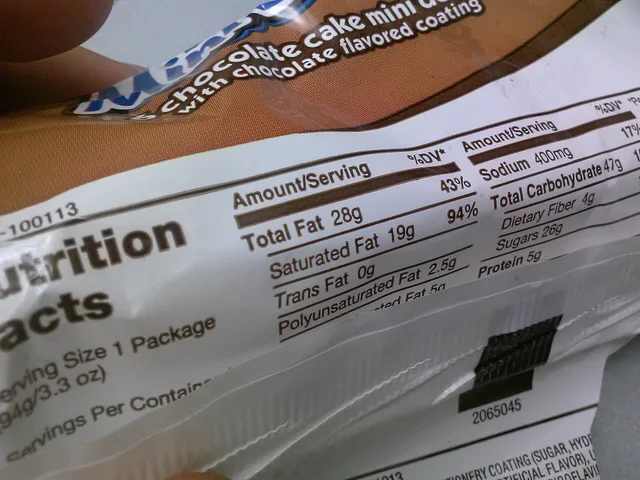
- Net quantity in metric and US units
- Statement on principal display panel
- No exaggerated fill
- Accurate weight on every unit
- Traceable production or lot code
- Ingredient, allergen, address, best-by
Buyers also check the basics: ingredient list, allergen callouts, business name and address, and a best-by date that matches the shelf life you quoted.
Random weight products, like cut cheese or portioned items, need their own check. If you sell by weight at a market, your scale must be inspected and approved for commercial use.
Run a labelling check before every print run. A two-minute review of net weight, allergen wording and the address line prevents the most common reason a New York buyer returns a pallet.
The margin check that follows the paperwork
Once the paperwork clears, margin decides the deal. A retailer buying direct typically wants to buy at about half the shelf price, so a jar selling at 12 dollars needs a wholesale price near 6 dollars.
A distributor takes its own cut on top, which pushes your effective price lower again.
Margin math for a $14 sauce
- 14retail shelf price
- 7store buys direct
- 5.60distributor buys from you
Run the arithmetic before you quote. If ingredients, packaging, labor and freight leave nothing at that wholesale number, the product is not ready for this market. Raising the retail price is usually easier than arguing about margin.
A worked example. A sauce retails at 14 dollars. The store buys at 7 dollars. A distributor buys from you at 5.60 dollars and sells to the store at 7 dollars. Your cost per unit is 3.40 dollars, so you keep 2.20 dollars before overhead. That account works. At a 4.50 dollar wholesale price it does not.
Price for the channel, not for the product. A farmers market price and a distributor price are different numbers, and both have to leave you a margin.
Set a minimum order as well. A case minimum keeps delivery costs sane and signals that you are a supplier, not a favor. Buyers respect a clear minimum more than a vague discount.
A buyer reorders when the product sells and the second delivery matches the first. One short shipment or one changed recipe can end an account that took a year to win.
Plan production around the reorder cycle: if a store sells through a case in three weeks, your lead time has to be shorter than that, or the shelf goes empty and the buyer moves on.
Keep a simple account record: order date, quantity, sell-through, complaints. That record is what you show the next buyer, and it is how you earn referrals from accounts that already trust you once you understand your specialty food profit margin.
Common questions
Do New York buyers require a broker or distributor?
No. Many independent shops and market vendors buy direct. Distributors help with volume, but they take a margin and expect proven retail sales first.
What margin do New York specialty food buyers expect?
Retailers typically want to buy at about half the shelf price. Distributors need their own margin, so plan for a wholesale price that still leaves you a profit after both.
Which permits does a buyer ask to see?
For processors subject to state licensing, buyers may ask for the New York State Agriculture and Markets Food Processing Establishment License under Agriculture and Markets Law Article 20-C, your production address, and proof of food safety training.
In New York City, confirm with NYC DOHMH whether your operation also needs a Food Service Establishment permit under NYC Health Code Article 81. Federally regulated facilities generally need FDA registration unless an exemption applies.
Can I sell at New York City farmers markets without a storefront?
Yes, provided you meet the market's vendor rules and any state permit that applies to your product. Markets set their own application and insurance requirements.